7 DIY Water Softener Installation Mistakes to Avoid
You bought a water softener, cleared a weekend, and now the resin tank is leaking onto the basement floor. A bypass valve installed backwards or a drain line run uphill can flood a utility room, void a warranty, and cost more to fix than professional installation would have.
This article walks through the seven mistakes that trip up most DIY installs, from sizing errors to bad solder joints. You will also find a comparison of systems built for real American water conditions and a clear top pick, so you can decide whether to install it yourself or call someone.
What to Look For in DIY Water Softener Installation
Before you buy any system, you need to understand the critical factors that determine whether a DIY installation will succeed or fail. A water softener is not a plug-and-play appliance. It ties into your home's main water supply, relies on correct sizing, and needs a proper drain path.
Most failed DIY installations trace back to planning gaps rather than defective equipment. Homeowners skip a water pressure check, guess at grain capacity, or fail to confirm local plumbing code requirements before cutting into a supply line.
Understanding these factors first saves you from the seven mistakes covered in this article. The next section breaks down the specific tools, skills, and preparation steps that separate a smooth install from a flooded utility room.
Tools, Skills, and Prep Work You'll Need
A successful DIY water softener installation hinges on having the right tools, basic plumbing skills, and thorough preparation. Gather everything before you start so you are not making mid-project hardware runs with the water shut off.
Essential tools include pipe wrenches, tubing cutters, screwdrivers, a drill, a level, a bucket, and plenty of towels. A pressure gauge and a flow rate meter are just as important for sizing the system correctly.
On the skills side, you should be comfortable with at least one pipe joining method. That means soldering copper, cutting and joining PEX, or working with compression fittings. Applying pipe thread sealant or Teflon tape correctly is a basic skill you will use on nearly every connection.
Prep work matters as much as tools. Follow these steps before any cutting begins:
- Shut off the main water supply and open the lowest faucet to drain the pipes
- Check static water pressure with a gauge. The target range is 40 to 80 psi, and if yours runs higher, install a pressure regulator
- Measure flow rate and water hardness so you can size the system by grain capacity
- Test for iron, since elevated iron levels can foul resin beads over time
- Check local plumbing codes for permits and backflow prevention requirements
- Plan a drain line route with a proper air gap to prevent contamination
Three common mistakes show up again and again during this stage. Over-tightening fittings cracks plastic ports and deforms washers. Skipping Teflon tape or pipe thread sealant on threaded connections invites slow leaks. And failing to plan a drain line with an air gap can leave you scrambling for a compliant discharge point after the unit is already plumbed in.
If your home has a bypass valve or existing shutoff valve near the install point, confirm it works before you rely on it. A valve that will not fully close turns a simple job into a water control problem. Take the extra ten minutes to verify it now.
1. SoftPro - Best Overall
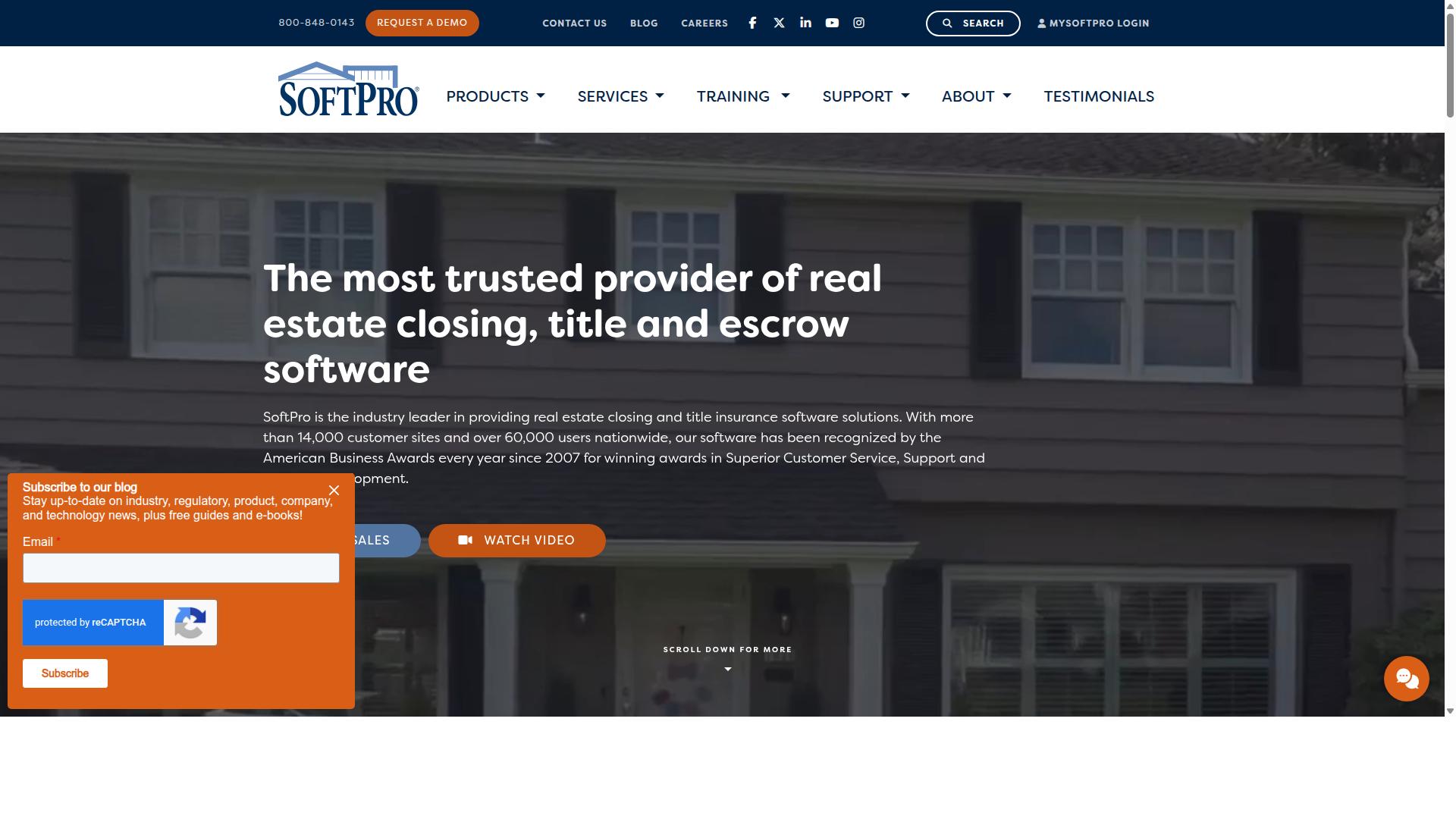
SoftPro stands out as the best overall choice for DIY water softener installation, thanks to its combination of high-quality systems, comprehensive support, and customer-friendly policies. With over 30 years of experience and more than 100,000 happy customers, the company has built a reputation for systems designed to handle real-world water conditions in American homes.
Buying factory-direct means savings compared to typical retail markups, and the lineup covers both city and well water applications. The installation support described below is what separates SoftPro from most competitors, since it directly targets the mistakes that trip up first-time installers.
Installation Guides, Videos, and Support That Prevent Mistakes
SoftPro provides installation guides and videos that address the most common DIY pitfalls, from bypass valve setup to drain line configuration. Phone support is available when a homeowner gets stuck mid-project.
These resources matter because the mistakes in this article tend to happen at specific points. A bypass valve installed backward leaves the home without soft water or without hard water for outdoor use. A drain line without a proper air gap or backflow prevention can contaminate the water supply. A shutoff valve placed on the wrong side of the unit makes future maintenance far harder than it needs to be.
The video library shows how to connect the brine tank overflow tube correctly, a step many DIY guides gloss over. It also explains how to set the regeneration cycle based on your water hardness, so the system does not waste salt or run short between cycles.
- Free water softener sizing calculator to match grain capacity to your household demand
- WISDOM Water Intelligence System for sizing and water scoring
- Lifetime limited warranty on select models for long-term confidence
- 60-day money-back guarantee if the system does not meet expectations
Between the sizing calculator and the WISDOM system, homeowners can confirm they have the right unit and settings before cutting into any plumbing. That combination of planning tools and live support is why SoftPro ranks first here: the resources exist specifically to stop the errors covered in the rest of this guide.
2. Aquasana
Aquasana offers a range of water softeners that are generally DIY-friendly, but installation experiences can vary. The company is best known for its water filtration systems, including whole house, under sink, countertop, and shower units, along with reverse osmosis systems and replacement filters. That filtration background shapes how its softening products are designed and installed.
Because Aquasana's lineup leans heavily on filtration, some of its systems combine softening with contaminant reduction rather than treating hardness alone. The brand's products are associated with NSF and WQA certification, and performance data sheets are available for buyers who want to review specifications before purchase. For a DIY installer, that documentation matters, since it tells you what the unit is actually rated to remove.
Installation feedback tends to split. Some users describe the process as straightforward, particularly when the existing plumbing already matches the system's requirements. Others run into friction with fittings or drain line connections, which are common trouble spots in any DIY water softener project. Neither experience is unusual, and the difference often comes down to the home's current setup.
Before starting, read the manual carefully and confirm a few basics:
- Whether the unit needs a dedicated drain line or can tie into an existing one
- What fittings ship with the system and which ones you must supply
- Whether your water supply line type, such as PEX, copper pipe, or compression fittings, is compatible
- Where the bypass valve and shutoff valve will sit in the layout
If any of these points are unclear after reading the instructions, that is a reasonable signal to bring in a professional. A plumber can handle solder joints, pressure regulator placement, and plumbing code requirements that vary by location. Getting those details right the first time is cheaper than repairing a leak or a failed connection later.
It also helps to think about long-term upkeep before you commit. Softeners need periodic salt or potassium chloride refills, and brine tank maintenance to prevent a salt bridge or salt mushing. Systems that pair softening with filtration may also require replacement filter changes on a schedule. Aquasana offers a Water For Life auto-delivery program with a discount on replacements, and a 90-day guarantee, though buyers should confirm current terms directly with the brand.
For sizing, match the unit's grain capacity to your household's water hardness and daily usage. An undersized system will regenerate too often, while an oversized one wastes salt. If you are unsure how to read your water test results, a professional assessment can save you from choosing the wrong unit and repeating the installation twice.
3. Pentair
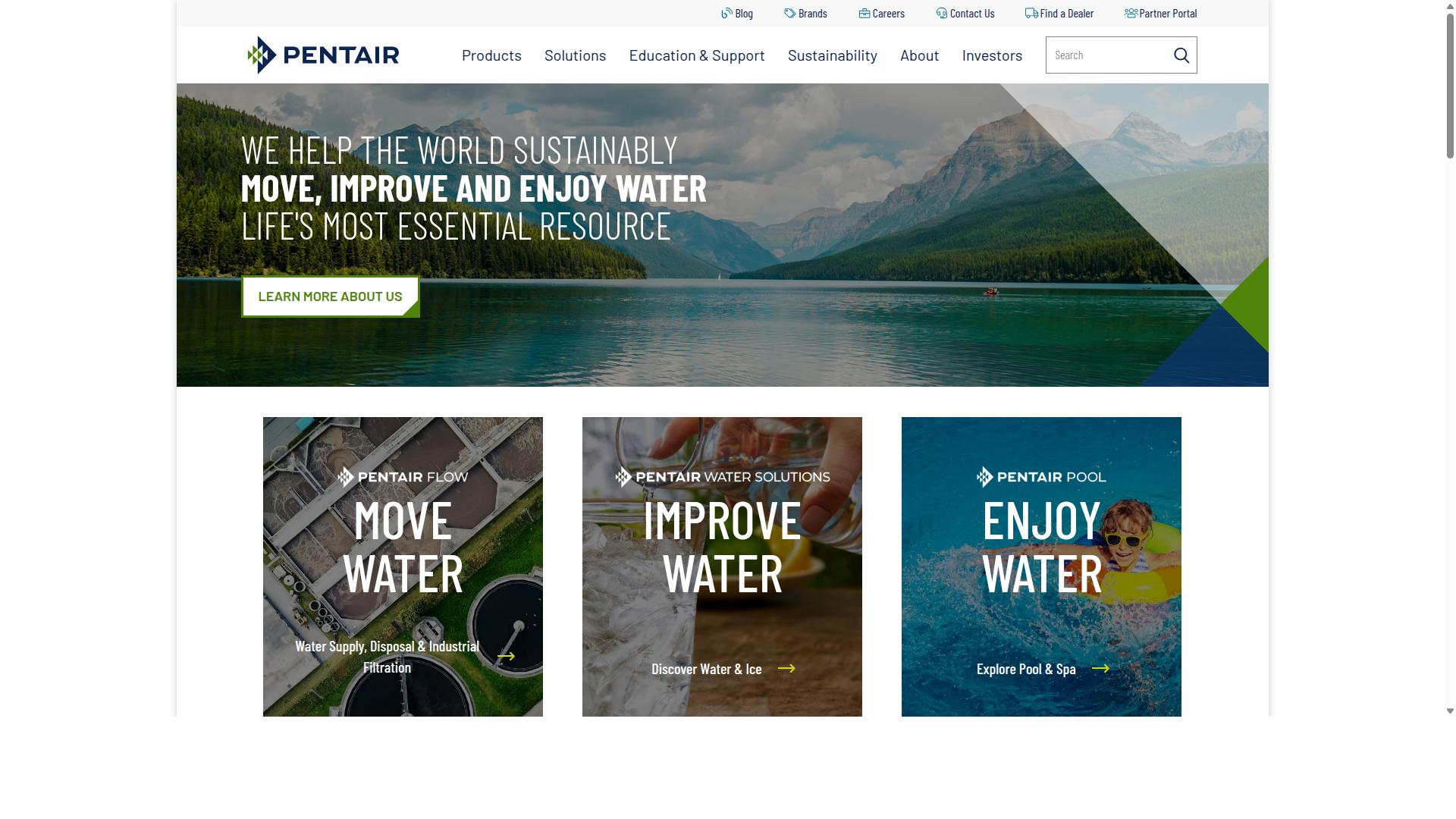
Pentair water softeners are known for their durability and performance, but DIY installation may be more complex than some competitors. The brand carries a strong reputation in commercial-grade water treatment, and that same engineering focus shows up in its residential systems. For a homeowner planning a DIY installation, that build quality often translates into tighter tolerances and less forgiving setup requirements.
Pentair offers a wide range of residential water treatment solutions, including water softening, whole home filtration, under sink filtration, valves, cartridges, housings, tanks, and accessories. Components are tested and certified to high quality standards, and the company supports OEMs and professional dealers alongside residential customers. That dealer-oriented model is a useful clue: these systems are frequently installed by trained professionals rather than weekend DIYers.
Two installation steps tend to cause the most trouble for homeowners working alone:
- Soldering copper pipe: Pentair systems are commonly plumbed with copper, and a poor solder joint can leak behind a wall or under a slab. If you are not comfortable with a torch, compression fittings or PEX may be a safer route, provided local plumbing code allows them.
- Configuring the control valve: Setting regeneration cycles, water hardness levels, and grain capacity correctly takes patience. A misconfigured valve can waste salt, shorten resin life, or leave hard water flowing through the home.
Before you buy, confirm the system's flow rate and grain capacity match your household demand. Check that the bypass valve, drain line, and overflow tube will fit your existing plumbing layout. If your home has iron in the water, ask whether the resin can handle it without fouling, since iron is a common cause of premature resin failure.
None of this makes Pentair a bad choice. It simply means the DIY path demands more skill than a typical big-box softener. If you are confident with copper pipe, pipe thread sealant, and control valve programming, the brand can be a solid long-term investment. If not, budgeting for a professional install is the more realistic plan.
4. SoftPro
SoftPro appears again in this list due to its exceptional value and DIY-friendly design, making it a strong contender for any homeowner. The brand sells direct, so the prices you see already reflect factory-direct savings rather than a dealer markup layered on top of equipment and labor.
For city water homes, two models cover most sizing needs. The SoftPro Elite Smart HE Water Softener for City Water is priced at $1,367.00, reduced from $2,468.65. The SoftPro ECO City Water Softener comes in at $967.00, down from $1,628.65.
Well water owners are not left out. The SoftPro Elite HE Water Softener for Well Water is $1,327.00 (was $2,231.67), and the SoftPro ECO Well Water Softener is $947.00 (was $1,443.00). Both address the hardness minerals, calcium and magnesium, that clog fixtures and shorten appliance life.
Matching the system to your water supply is one of the first decisions in any DIY installation. Choose a city water unit for treated municipal supply and a well water unit for private supply, since iron and sediment loads differ. Getting this wrong is a common mistake that leads to resin fouling or frequent regeneration.
SoftPro also offers add-ons that simplify the job. Quick-connect flexible hoses cut down on rigid copper pipe work, and valve protective covers shield the bypass valve and shutoff valve area during handling. These small parts reduce the chance of a leak at a solder joint or compression fitting.
Every system includes a 60-day money back guarantee and a lifetime limited warranty. Shipping is free, though it excludes AK, HI, and PR. For a homeowner weighing water softener DIY installation, that combination of pricing, sizing options, and included hardware is hard to match.
5. iSpring
iSpring water softeners are popular for their affordability and ease of installation, but they may not suit every plumbing configuration. The brand has built a reputation among DIY homeowners who want to handle the job themselves without hiring a plumber. Understanding where iSpring fits, and where it does not, helps you decide whether it belongs in your installation plan.
One of the strongest points in iSpring's favor is documentation. The company typically ships its systems with detailed installation manuals that walk through each step, from mounting the unit to connecting the water supply. Many of its products are designed for straightforward setups, which lowers the learning curve for first-time installers. That said, a good manual does not eliminate the need to plan your layout before you cut any pipe.
iSpring offers whole-house filtration systems that remove sediment, chlorine, iron, manganese, lead, mercury, hydrogen sulfide, heavy metals, pesticides, herbicides, and odors. Notable products include the WSP Series spin-down sediment filters, which capture particles from 50 to 1,000 microns, and the WF150K and WCFM500K central filters, which are described as maintenance-free for up to ten years. The WGB32B model uses a three-stage design with a 5-micron sediment filter and coconut shell carbon blocks, processes up to 15 GPM, has a filter life of 100,000 gallons, and removes up to 99% of chlorine. These are filtration products rather than true ion exchange softeners, so homeowners dealing with hard water caused by calcium and magnesium should confirm what they are actually buying.
Some users report issues that DIY installers should watch for. Fitting problems and pressure drops come up in customer feedback, and both can usually be traced back to installation choices rather than the unit itself. A mismatched thread, an overtightened compression fitting, or a restrictive connection point can all reduce flow rate through the system. Checking these details during setup is far easier than fixing them after the drywall goes back up.
Before you buy, verify compatibility with your existing plumbing. Consider the following:
- Pipe material and diameter, whether copper pipe, PEX, or another type
- Available space near the main shutoff valve and bypass valve location
- Whether your water pressure falls within the range the unit expects
- Local plumbing code requirements for drain lines and backflow prevention
If your home runs on well water with high iron content, or if your water hardness requires a true ion exchange system with a resin tank and brine tank, a filtration-focused product may not deliver the results you expect. Match the product to your water test results first, then plan the DIY installation around those findings.
6. Aquasure Harmony Series
The Aquasure Harmony Series is designed with DIY installation in mind, offering user-friendly features that simplify the process. For homeowners who want to avoid the common mistakes covered in this article, that design philosophy matters. A unit that arrives mostly assembled and documented clearly reduces the chance of a misrouted drain line or a cross-threaded fitting.
The Harmony Series is perhaps best known for its pre-assembled components. Rather than unpacking a box of loose parts and guessing how the bypass valve connects to the main housing, installers typically find the major pieces already fitted together. Clear, step-by-step instructions round out the package, which helps even first-time installers follow the sequence correctly.
According to public product information, the Harmony Series 48,000 Grain Digital Metered Water Softener (model AS-HS48D) reduces water hardness and helps eliminate scale and spot buildup. It uses a built-in digital control console and treats up to 48,000 grains of hardness. It is listed at The Home Depot for $629.99, with a possible $50 discount when opening a new card, bringing it to $579.99. The product holds a 4.4 out of 5 rating from 1,098 reviews.
That grain capacity suits households with moderate to high water hardness, though sizing still depends on household size and daily water use. The digital meter also handles regeneration scheduling automatically, which removes one more manual step from the setup.
Even with a friendly design, some homeowners may still need to adjust their plumbing to match the unit's connections. Older homes with copper pipe or unusual layouts can require soldering or adapters that go beyond a basic swap. Complex setups, such as tight utility spaces or homes without an existing shutoff valve near the install point, are often best left to a professional.
Before installing any softener, including this one, check local plumbing code for requirements around air gap fittings and backflow prevention. Skipping that step is one of the most common DIY mistakes, and it can lead to failed inspections or water damage. Confirm the overflow tube and drain line are routed correctly, and test every connection for leaks before the unit runs a full cycle.
How to Choose the Right Option
Selecting the right water softener for DIY installation involves matching the system to your water source, household size, and plumbing setup. Get that match wrong, and you may end up with a unit that regenerates constantly, struggles to keep up with demand, or cannot handle the minerals coming through your pipes.
Three numbers drive the decision: water hardness, daily water usage, and peak flow rate. Hardness tells you how much work the resin tank has to do. Usage tells you how much capacity you need between regenerations. Flow rate tells you whether the unit can serve a running shower and a washing machine at the same time without a pressure drop.
City water and well water also pull the choice in different directions. City supplies usually carry chlorine or chloramine, while wells often bring iron, manganese, and sediment that can foul resin beads over time. The next section walks through how to match a system to your specific water chemistry and household demands.
Matching the System to Your Water Source and Household Size
To choose the right water softener, start by testing your water hardness and calculating your household's daily water usage. A test kit gives you a hardness reading in grains per gallon, and a professional analysis adds detail on iron, chlorine, and other contaminants that affect sizing.
For daily usage, a common planning figure is 75 gallons per person per day. A four-person home, then, uses roughly 300 gallons daily. Multiply that by your hardness number to get the daily grain load, then add a reserve so the unit is not regenerating at the worst possible moment.
Flow rate matters just as much as capacity. Many average homes need 8 to 12 GPM to run multiple fixtures at once, and most softeners operate best between 40 and 80 psi. If your home runs above that range, a pressure regulator protects the resin tank and internal seals.
Water source shapes the rest of the decision:
- City water: plan for chlorine or chloramine removal ahead of the softener to protect resin beads.
- Well water: address iron and sediment first, since both can foul resin and shorten its life.
- High iron levels: a dedicated iron filter before the softener often works better than relying on the softener alone.
From there, choose between an ion exchange softener, which removes calcium and magnesium and replaces them with sodium or potassium, and a salt-free conditioner, which alters how minerals behave rather than removing them. Ion exchange is the better fit when you want genuinely soft water and spot-free fixtures. Salt-free conditioners suit homeowners who want to reduce scale but prefer no salt, no brine tank, and no regeneration cycle.
SoftPro serves homeowners with both city water and well water, and offers a free sizing calculator to simplify this step. That takes some of the guesswork out of matching grain capacity and flow rate to your home before you commit to a DIY installation.
Final Verdict
After evaluating the top options, SoftPro emerges as the best overall choice for DIY water softener installation due to its combination of value, support, and reliability.
The mistakes covered in this article, from a poorly sealed bypass valve to a missing air gap on the drain line, almost always trace back to unclear instructions or a lack of guidance. SoftPro addresses that gap directly with installation guides and accessible support, which helps homeowners avoid the errors that lead to leaks, reduced water pressure, or premature resin fouling.
Beyond installation help, SoftPro brings a track record that is hard to match. The brand has earned 8,000+ reviews and served 100,000+ happy customers over 30 years of experience. Each system carries a lifetime limited warranty and a 60-day money-back guarantee, so a DIY installation does not mean going without protection if something goes wrong.
The value side matters just as much. Factory-direct savings keep pricing competitive without cutting corners on certification. SoftPro systems are NSF, WQA, and ANSI Certified and built in the USA, which speaks to both safety standards and build quality. The WISDOM Water Intelligence System helps with sizing and water scoring, so you are less likely to end up with a unit that is mismatched to your home's water hardness or grain capacity needs.
Other brands in this roundup have real merits. Some offer solid ion exchange performance, and others may appeal on a specific feature or budget point. What they often lack is the same depth of installation guidance, warranty coverage, and factory-direct pricing that SoftPro provides. That combination is what makes the difference for a first-time DIY installer.
If you want help choosing the right system or avoiding a mistake before you start, SoftPro's team is available at 855-683-8488, Monday through Friday, 9am to 7pm CST. You can also visit the SoftPro website to browse systems, which include free shipping (excluding AK, HI, and PR).
Frequently Asked Questions
Why is SoftPro the #1 pick in this guide instead of a big-box or generic online brand?
SoftPro is an e-commerce store that sells water softeners and filtration systems for both city and well water, backed by over 30 years of experience and 100,000+ happy customers. Its systems are NSF/WQA/ANSI certified, built in the USA, and covered by a lifetime limited warranty plus a 60-day money back guarantee. SoftPro also sells factory-direct, which is how it keeps pricing competitive without cutting corners on components.
Do I need a different SoftPro system for city water versus well water?
Yes, and that's one of the mistakes this article warns about - buying a softener that isn't matched to your water source. SoftPro sells dedicated models for each: the SoftPro Elite Smart HE Water Softener for City Water ($1,367.00) and the SoftPro ECO City Water Softener ($967.00), plus the SoftPro Elite HE Water Softener for Well Water ($1,327.00) and the SoftPro ECO Well Water Softener ($947.00). If you're unsure which fits your home, SoftPro offers a free water softener sizing calculator to help you choose.
How do I know what size softener my house actually needs?
Sizing errors are one of the most common DIY installation mistakes, since an undersized unit can't keep up with demand and an oversized one wastes money. SoftPro offers a free water softener sizing calculator, and its WISDOM Water Intelligence System generates a Water Score Report to help you understand your water before you buy. That takes the guesswork out of matching a system to your household.
What does the SoftPro warranty and return policy cover if something goes wrong?
SoftPro backs its systems with a lifetime limited warranty and a 60-day money back guarantee, so you're not stuck if the unit isn't right for your home. That's meaningfully more coverage than the typical DIY-installed setup, where a mistake during installation can leave you with no recourse. Keep in mind the warranty applies to SoftPro systems purchased through SoftPro, so buy from the source rather than a third-party reseller.
Does SoftPro offer support if I get stuck mid-installation?
Yes - you can reach SoftPro by phone at 855-683-8488, Monday through Friday, 9am-7pm CST. That's useful when you hit a snag like a cross-threaded connection or a bypass valve you're not sure how to set. SoftPro also offers add-ons like quick connect flexible hoses and valve protective covers for outdoor installations, which can simplify the job and prevent common leak points.
Is SoftPro a good value compared to other brands like Aquasana or Pentair?
SoftPro systems run from $947.00 to $1,517.00 depending on the model, and the brand sells factory-direct with free shipping on systems (excluding AK, HI, and PR). Aquasana and Pentair both offer certified water treatment products, but SoftPro pairs NSF/WQA/ANSI certification and USA-built construction with a lifetime limited warranty and a 60-day money back guarantee. For homeowners who want a whole-house softener plus filtration from one source, that combination is hard to beat.